
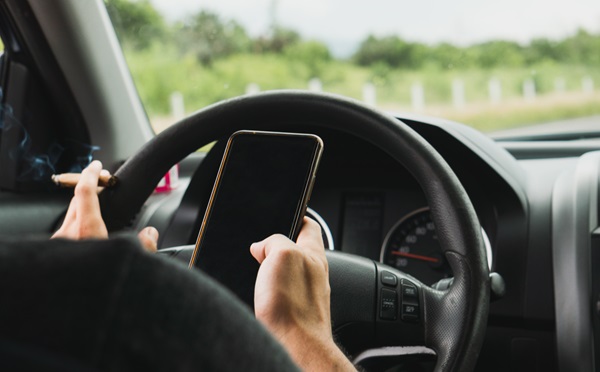
The rise in deaths involving marijuana-impaired drivers should be a wake-up call
An increasing number of drivers are causing car accidents while under the influence of THC, the main psychoactive ingredient in marijuana and other forms of cannabis, according to a recent study conducted by Safety + Health.
“People should treat smoking marijuana just like they treat alcohol: Don’t smoke and drive,” Lead study author Akpofure P. Ekeh, a professor of surgery at Wright State in Dayton, said in an interview with Safety + Health magazine.
How often do high drivers cause crashes?
The numbers are clear – high drivers often cause car accidents. Safety + Health magazine’s study by researchers from Wright State University examined car accident data from Ohio’s Montgomery County from January 2019 to September 2024.
According to the study, more than 40 percent of drivers killed in car accidents during those six years had active THC in their system at the time of the accident. In addition, the deceased drivers’ “average THC blood levels far exceeded what’s considered to cause impairment,” according to Safety + Health magazine.
Specifically, 103 drivers (41.9 percent) out of 246 drivers tested positive for THC, with annual positivity ranging from 25.7 percent to 48.9 percent over the study period. The percentage of THC positivity showed no significant change before (42.1 percent) and after (45.2 percent) legalization of cannabis. Ohio legalized recreational marijuana in 2023.
What makes driving under the influence of cannabis so dangerous?
Driving after using cannabis puts everyone at risk on the road for a wide range of reasons. Some of the reasons why high drivers are so dangerous include:
- Slower reaction time – THC can delay reaction time by up to half a second. That may not sound significant, but at highway speeds, it can mean traveling dozens of feet before reacting to a hazard. This delay often prevents high drivers from stopping in time to avoid collisions.
- Impaired judgment and decision-making – Cannabis affects the brain’s ability to assess risk. Stoned drivers may misjudge distances, speeds, or their own ability to drive safely, leading them to take chances they otherwise would avoid.
- Reduced coordination and motor control – Driving requires constant coordination between hands, feet, and eyes. THC disrupts this coordination, making steering less precise and increasing the risk of drifting between lanes or overcorrecting.
- Distorted perception of time and space – Marijuana can alter how drivers perceive time and distance. This distortion can cause high drivers to brake too late, turn too wide, or underestimate how quickly other vehicles are approaching.
- Divided attention and delayed focus – Cannabis makes it harder to concentrate on multiple tasks at once. High drivers often struggle to track traffic signals, road signs, and surrounding vehicles simultaneously, which is critical for safe driving.
What are Colorado’s cannabis driving laws?
Since 2014, Colorado has allowed adults to use recreational marijuana legally, but state law clearly prohibits driving while impaired by cannabis. Under Colorado Revised Statutes § 42-4-1301, a driver can be charged with DUI or DWAI if marijuana affects their ability to operate a vehicle safely. The law treats drug impairment the same way it treats alcohol impairment, meaning a driver does not need to be falling down drunk or obviously intoxicated to be violating the law.
Colorado does not have a strict THC limit that automatically proves impairment. Instead, state law allows a jury to infer impairment if a driver’s blood contains five nanograms or more of active delta-9 THC per milliliter. This is called a permissible inference, not an automatic conviction. Police can still arrest and charge a driver based on observed signs of impairment, such as slowed reactions, unsafe driving, poor coordination, or failed roadside tests, even if THC levels are below that threshold.
These cannabis driving laws apply to both recreational and medical marijuana users. Having a medical marijuana card does not excuse impaired driving. Colorado law enforcement may rely on field sobriety testing, trained Drug Recognition Experts, and blood tests to determine whether cannabis affected a driver’s ability to drive safely. For crash victims, these laws matter because a driver can be legally impaired even without extreme THC levels, and that impairment can form the basis for both criminal charges and civil injury claims, according to the Colorado Department of Transportation (CoDOT) guidelines on drugged driving.
The Longo Firm, LLC, fights for crash victims in Colorado
A crash caused by a high driver can change everything — physically, financially, and emotionally. At The Longo Firm, LLC, we understand how overwhelming that feels, and we’ve seen how complicated these cases can become when impairment is involved. If you or someone you love was hurt in a cannabis-related crash, we can help you pursue justice and recover what you deserve.
Put your trust in a Colorado Springs car accident lawyer who puts your best interests first. Contact us and schedule a free and confidential case evaluation today. We handle injury claims throughout Colorado and Arizona.
“After my car accident, Stephen worked hard on my case, and with true integrity. He answered all my questions and helped me to feel a little more at ease. I highly recommend The Longo firm and am glad I chose them to represent me. ” – Amy, ⭐⭐⭐⭐⭐