
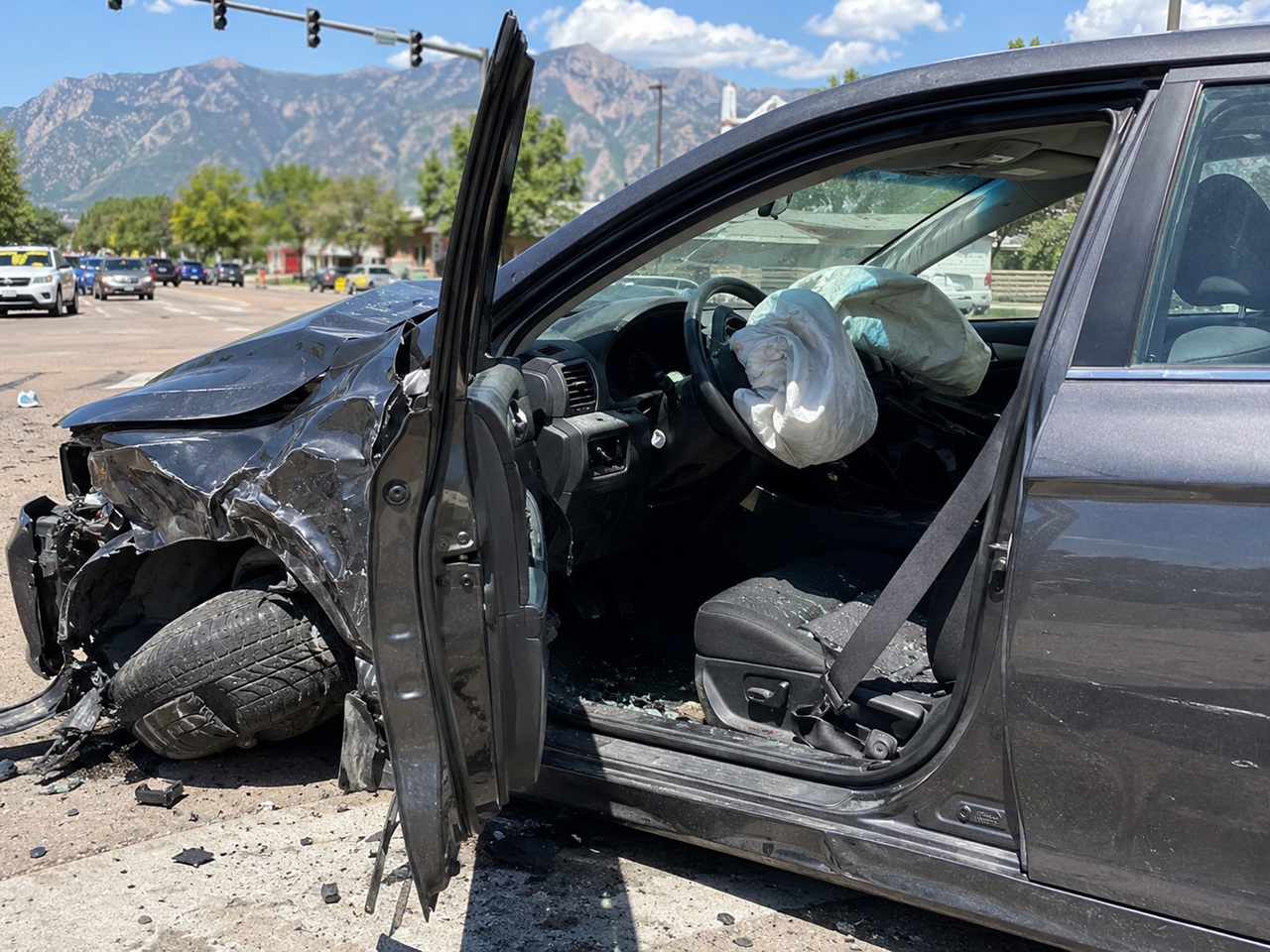
Colorado Seat Belt Deaths Show Why Summer Crashes Can Be So Severe
Summer is a dangerous time to be on Colorado roads, and state data show one of the clearest reasons why. Preliminary figures from the Colorado Department of Transportation found that 188 people died on Colorado roads in 2025 because they were not wearing a seat belt. Those numbers received renewed attention at the start of the 100 deadliest days of summer, when law enforcement agencies warn that crash risks rise across the state.
According to KJCT 8 News, the Colorado State Patrol, Grand Junction Police Department, and CDOT launched a summer seat belt safety campaign in response to the numbers. Officers emphasized a simple point: no one can predict when a crash will happen, and a short trip can become a life-changing collision in seconds.
Colorado Springs car accident attorney Stephen A. Longo of The Longo Firm, LLC, represents injury victims across Colorado. If you were hurt in a car accident, whether or not you were wearing a seat belt, you may still have a legal claim. What matters is how Colorado law applies, what caused the crash, what injuries were actually affected by seat belt use, and how the insurance company tries to frame the evidence.
What Did Colorado’s 2025 Seat Belt Data Show?
The 188 fatalities reported in the 2025 preliminary data reflect a preventable pattern that Colorado safety officials continue to see on the road. Drivers and passengers skip the seat belt because they are close to home, riding only a short distance, or assuming a serious crash will not happen to them. The crash does not care how far someone planned to drive.
The National Highway Traffic Safety Administration identifies buckling up as one of the most important choices a driver or passenger can make. NHTSA reports that for front-seat passenger car occupants, seat belts reduce the risk of fatal injury by 45 percent and moderate-to-critical injury by 50 percent.
That is why seat belt data matters in a Colorado injury claim. The issue is not only whether someone violated the seat belt law. The deeper question is whether the lack of a seat belt actually changed the injuries suffered in the crash, and if so, how much.
Why Does A Seat Belt Make Such A Difference In A Crash?
When a vehicle stops suddenly, your body keeps moving at the speed the car was traveling. Without a seat belt, that energy can send you into the steering wheel, dashboard, windshield, door frame, or roadway. At highway speed, the result can be catastrophic.
A seat belt helps keep an occupant in position and distributes crash forces across stronger parts of the body. It also helps airbags work as designed, because airbags are meant to work with seat belts, not replace them.
What a seat belt does in a crash:
- Prevents Ejection: Ejection from a vehicle is often deadly. Seat belts are the primary safeguard against being thrown from the vehicle during a collision or rollover.
- Distributes Impact Force: The belt spreads crash energy across the chest, hips, and pelvis rather than concentrating force in the head, neck, or abdomen.
- Keeps You In Position: Staying in your seat helps the airbag deploy correctly. Without a belt, you may have already moved out of the airbag’s protection zone before it activates.
- Reduces Head And Brain Trauma: Seat belts reduce the risk of head-to-glass, head-to-dashboard, and partial ejection injuries that can cause brain trauma.
Seat belt use can be especially important in rollover crashes that cause traumatic brain injuries. When a vehicle flips or rolls, an unbelted occupant can be thrown around the interior, partially ejected, or fully ejected, which can make already violent crash forces even more dangerous.
What Does Colorado Law Say About Seat Belts?
Under C.R.S. § 42-4-237, drivers and front-seat passengers must wear a fastened seat belt while traveling on Colorado roads. Adult seat belt violations are generally secondary enforcement violations, meaning an officer cannot cite the driver for a seat belt violation unless the driver was stopped for another traffic violation first.
The law is stricter for minors. A driver under 18 who violates Colorado’s seat belt law can face various penalties, and violations involving child restraints are treated more seriously. For families, the legal takeaway is simple: seat belt use is not just a safety issue. It can also become part of the injury claim if a crash occurs.
Colorado’s seat belt law contains an important injury-claim provision. Evidence that an injured person was not wearing a seat belt can be admitted in a lawsuit to mitigate damages, but the statute limits that mitigation to pain and suffering. It cannot be used to reduce economic losses or medical payments.
Can You Recover Compensation If You Were Not Wearing A Seat Belt?
Yes. Not wearing a seat belt does not automatically bar a Colorado car accident claim. If another driver caused the crash, that driver can still be held responsible for the harm they caused. The seat belt issue may affect part of the damages analysis, but it does not erase the other driver’s negligence.
Colorado also follows modified comparative negligence under C.R.S. § 13-21-111. In general negligence cases, a person can recover damages if their negligence was not as great as the negligence of the person they are suing, but damages can be reduced by the injured person’s percentage of fault.
The seat belt defense is more specific. Colorado law allows the defense to use seat belt non-use to argue for a reduction in pain-and-suffering damages, but not for medical bills, lost wages, or other economic losses. That distinction matters because insurers may try to make the seat belt issue sound broader than it actually is.
Factors that shape how much the seat belt issue affects your claim include:
- Whether the Seat Belt Would Have Changed the Injury: If the defense can show that a seat belt would have prevented or reduced a specific injury, it may argue for a reduction in pain-and-suffering damages.
- The Nature Of The Crash: In some collisions, a seat belt would not have changed the outcome. Severe side-impact crashes, high-speed impacts, rollovers, and underride-style forces can cause catastrophic injuries even when someone is properly restrained.
- The Other Driver’s Conduct: If the other driver was speeding, drunk, distracted, or ran a red light, that conduct still matters. The seat belt issue does not erase the cause of the crash.
- How The Insurer Frames The Argument: Insurers may exaggerate the seat belt issue to push down settlement offers. A lawyer can challenge whether the argument is supported by the medical and crash evidence.
The key question is not simply whether you were buckled. The key questions are what caused the crash, what injuries it caused, and whether the defense can prove the seat belt issue actually affected the damages they are trying to reduce.
How Do Insurance Companies Use The Seat Belt Defense?
Insurance companies know Colorado’s seat belt statute gives them a specific argument. If they can make the claim about what the injured person did wrong, they may be able to shift attention away from the driver who caused the crash.
Adjusters may argue that the injuries would have been minor if the injured person had buckled up. They may claim the medical treatment was excessive, that the crash was not severe enough to cause the injuries, or that the claimant is responsible for most of the harm. Those arguments are often made before the insurer has fully analyzed the medical records, crash report, vehicle damage, or the mechanics of the injury.
That is why dealing with insurance companies after a car accident can be risky without legal guidance. The defense may use one fact, seat belt non-use, to try to overshadow every other fact in the case.
What Evidence Can Push Back Against A Seat Belt Defense?
A seat belt defense should not be accepted at face value. The defense must be tied to the specific injuries at issue, not just the fact that someone was unrestrained. That requires a careful review of the crash and the medical evidence.
Important evidence may include:
- The Colorado Crash Report: A crash report may include seat belt use, injury severity, airbag deployment, vehicle positions, contributing factors, and citations. Understanding how to read a Colorado car accident report can help identify what the officer recorded and what may need to be corrected or challenged.
- Medical Records: Emergency room records, imaging, surgical notes, and follow-up care can show the mechanism of injury and whether the injuries match the defense theory.
- Vehicle Damage: The location and severity of impact can show whether the crash forces would have caused serious injuries even if the occupant had been restrained.
- Witness Statements and Photos: Scene photos, witness accounts, and vehicle interior damage can help reconstruct how the occupant moved inside the vehicle.
- Crash Reconstruction Analysis: A reconstruction professional can analyze speed, impact angles, occupant movement, braking, and crash forces to determine whether the seat belt would have changed the injury outcome.
Evidence matters because the defense cannot simply say, “You weren’t wearing a seat belt, so your claim is worth less.” The argument must be grounded in what actually happened.
Why Are Summer Crashes So Dangerous In Colorado?
The seat belt campaign launched during the 100 deadliest days of summer for a reason. Summer driving brings more traffic, more teen drivers, more motorcycles, more tourists, more road trips, more impaired driving, and more late-night travel. In Colorado, mountain roads, construction zones, I-25 traffic, and high-speed rural highways can add even more risk.
Common summer crash factors include speeding, distracted driving, and drunk driving. Any of these can cause a serious crash, and the injuries can be worse when someone is unbelted.
Some crashes become fatal regardless of restraint use, especially when impact forces are extreme. If a loved one died in a summer crash, a fatal car accident claim may require a detailed investigation into speed, impairment, seat belt use, road conditions, vehicle safety systems, and every available insurance policy.
What Should You Do After A Colorado Crash Involving Seat Belt Issues?
If you were hurt in a crash and seat belt use may become an issue, do not assume you have no claim. You should get medical attention, report the crash, follow treatment instructions, preserve photos and documents, avoid recorded statements, and speak with a lawyer before accepting any settlement.
Knowing what to do after a Colorado car accident can help protect your claim from early mistakes. That is especially important when the insurance company has a built-in argument it can use to reduce part of the claim.
How Can A Colorado Springs Car Accident Attorney Help Me?
A crash involving seat belt non-use is exactly the kind of case insurers fight hard. They cite the statute, call in their own consultants, and argue your injuries would have been minor if you had buckled up. Without an attorney, you are negotiating against a team that handles these arguments every day.
Attorney Stephen Longo handles every case personally at The Longo Firm, LLC. He knows Colorado’s seat belt defense law, how insurers use it, and how to counter arguments that overstate what the statute allows. We handle cases on a contingency fee basis, meaning there are no fees or costs unless we recover compensation for you.
Contact us and schedule your free case evaluation with a Colorado Springs car accident attorney you can count on when it matters most. We fight to make sure the other driver’s negligence does not get buried under a legal technicality.
“After being involved in a rear-end collision, Stephen Longo was recommended by a friend who had also been a client. Best decision I could make. Stephen Longo was there through every step of the process, always ready to answer questions and get me the medical care I needed. He looked out for my interests and to make sure I would be able to have a complete-as-possible recovery, and get a settlement that was reasonable and without exorbitant fees. I highly recommend the Longo Law Firm, and while I hope I never have to use his services again, I’m glad to know that if I do, I have him in my corner.” – Gail, ⭐⭐⭐⭐⭐